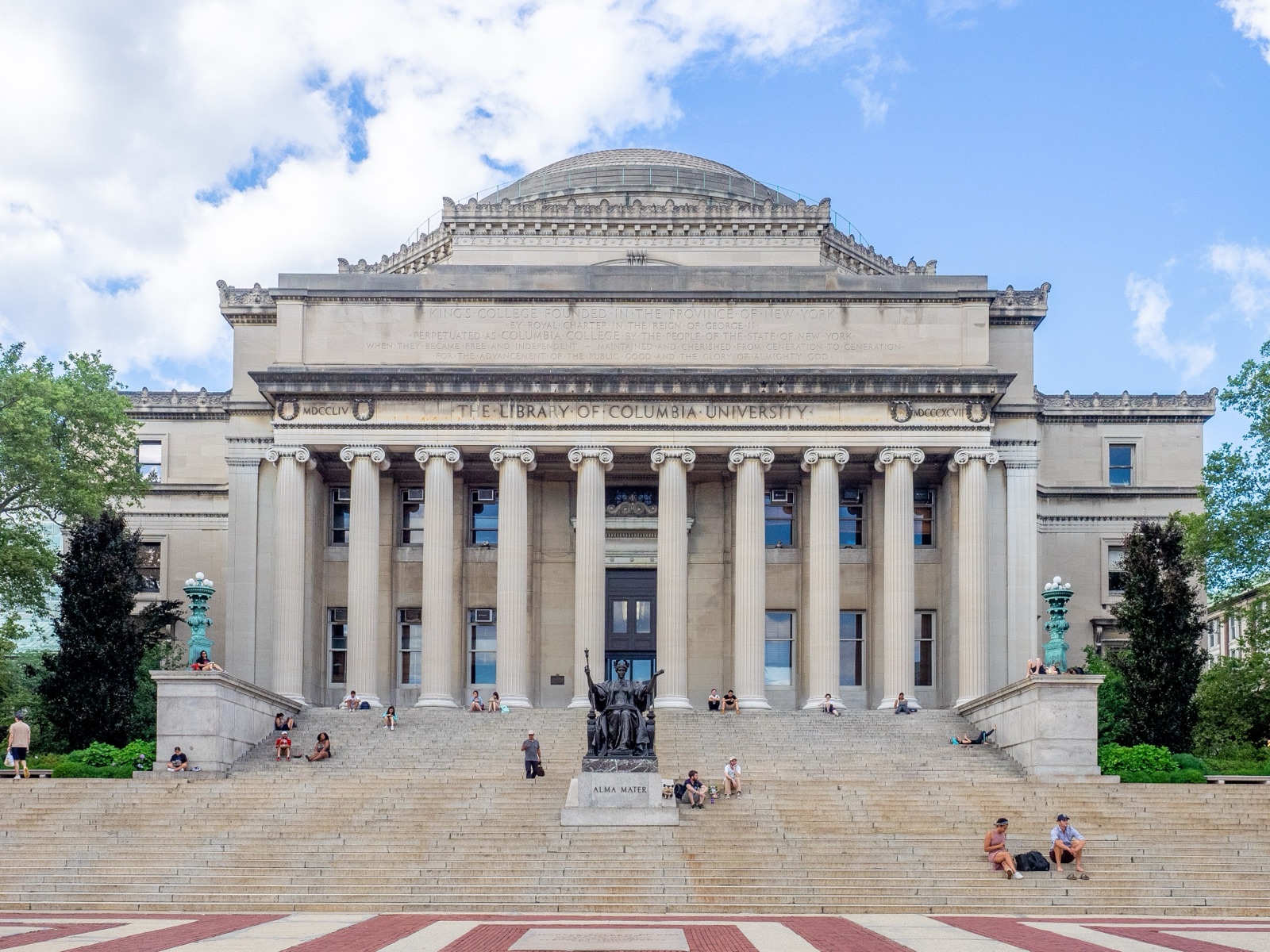
How to Transfer to Columbia University: Strategy & Requirements
Columbia's 2024-25 Common Data Set shows 4,180 transfer applications to Columbia College and Columbia Engineering for fall 2024, 375 offers, and a 9 percent admit rate. The same year, Columbia's School of General Studies admitted 697 of 1,330 transfer applicants. That is 52 percent, at the same university, for the same classrooms and a Columbia degree. The second number rarely comes up when people talk about how to transfer to Columbia, and it should sit at the center of your planning.
I went from a 2.9 GPA to Cornell as a transfer, and I now spend my time helping students run routes like this one. Columbia rewards applicants who understand its structure more than any school I work on, so structure is where we start.
Three ways to transfer to Columbia
Columbia takes undergraduate transfers through three schools, and you apply to exactly one. Columbia College (CC) is the traditional liberal arts college. Columbia Engineering (SEAS) covers engineering and applied science and expects your math and physics sequence to be well underway. The School of General Studies (GS) is the school for students whose path bent somewhere along the way, and it deserves far more attention than it gets, because it grants a full Columbia bachelor's degree taught by the same faculty.
Columbia draws the eligibility lines itself, on its admissions site:
- CC and SEAS applicants should have completed at least one full academic year of college, around 24 credits, by the time they enroll, and candidates with more than four semesters finished are told not to apply.
- A break in your education longer than a full year, for any reason besides required national military service, routes you to GS. So does needing to study part time.
Read those lines twice if your record is nontraditional. A 26 year old veteran, a student who worked for two years mid-degree, a parent going back to school: Columbia has already decided which of its schools evaluates you, and forcing a CC application anyway collects a rejection from readers who were never going to weigh your file. GS also admitted 153 of 516 first-time applicants for fall 2024, about 30 percent, per its own Common Data Set. This is a large, functioning door, and it is the single most underexplained fact in Ivy League transfer admissions.
The admit rates by school
| School | Entry | Applied | Admitted | Rate |
|---|---|---|---|---|
| Columbia College + SEAS | Fall 2022 | 3,008 | 341 | 11.3% |
| Columbia College + SEAS | Fall 2023 | 3,254 | 329 | 10.1% |
| Columbia College + SEAS | Fall 2024 | 4,180 | 375 | 9.0% |
| School of General Studies | Fall 2024 | 1,330 | 697 | 52.4% |
The CC and SEAS rows come from Columbia's Common Data Set filings. The GS row comes from the separate Common Data Set that GS publishes, which also shows 410 of those admits enrolling. Two movements matter in that table. Applications to CC and SEAS climbed almost 40 percent in two years while offers barely moved, so the traditional door keeps narrowing. Meanwhile the GS pool stayed small, 1,330 applicants competing for nearly 700 offers. Columbia's first-year admit rate for fall 2024 was 4.29 percent, which makes the CC transfer route about twice as forgiving as the front door, and GS more than ten times.
The Core Curriculum decides your two years
Columbia's Core, meaning Literature Humanities, Contemporary Civilization, Art Humanities, Music Humanities, University Writing, and the science and language requirements around them, is the spine of the degree, and Columbia's bulletin is blunt that transfers are very rarely excused from it. The same bulletin caps transfer credit at 60 points toward the 124-point degree, requires your final two semesters in residence on the Morningside campus, and expects graduation within eight total semesters counting the ones you already used.
Sit with the junior-transfer arithmetic for a second. Four semesters spent, four remaining, and inside those four you fit Literature Humanities, Contemporary Civilization, the rest of the Core, and your entire major. Students do it every year, but the schedule is effectively written before you arrive, and credits you pile up now beyond 60 buy you nothing.
The Core should also steer your essays. Columbia is choosing people who want two years of seminar argument over primary texts, so a transcript with serious reading and writing courses, plus a supplement that sounds like someone who enjoys close argument, outworks any activities list. I keep annotated examples in my transfer essay guide.
Deadlines for spring 2027 and fall 2027
CC and SEAS admit for fall only and take the Coalition Application on Scoir rather than the Common App, a detail that catches applicants off guard every cycle. GS runs its own application with both spring and fall entry, making it the only Columbia door open for January 2027.
| Path | Entry term | Deadline |
|---|---|---|
| GS priority early action | Spring 2027 | September 1, 2026 |
| GS early action | Spring 2027 | October 1, 2026 |
| GS regular decision | Spring 2027 | November 1, 2026 |
| GS priority early action | Fall 2027 | January 15, 2027 |
| GS early action | Fall 2027 | March 1, 2027 |
| CC and SEAS, Coalition App on Scoir | Fall 2027 | March 1, 2027 |
| GS regular decision | Fall 2027 | May 15, 2027 |
GS releases decisions on a rolling basis, typically six to eight weeks after each deadline, and per its admissions page it begins releasing fall decisions in March and spring decisions in October, so early filers hear back with time to sort out housing and money. For CC and SEAS, financial aid materials are due alongside the March 1 application. If you are reading this in August 2026 and want a spring 2027 start, the GS priority date is weeks away. Either way, fall 2026 is your last fully graded semester before a March file, so treat it accordingly.
Aid separates the three doors again
Columbia's financial aid office states that it meets 100 percent of demonstrated need for admitted CC and SEAS transfer students pursuing a first degree, with no merit, athletic, or artistic scholarships. Among transfer aid policies anywhere, that is about as strong as it gets.
GS is funded differently. Its aid runs on scholarships and federal programs rather than a meet-full-need commitment, and GS students commonly stack scholarships, work, and loans to cover the balance. The honest comparison is uncomfortable: the school that admits 52 percent funds less predictably, and the school that admits 9 percent covers everything for those who get in. If cost is a deciding constraint for you, that tradeoff belongs in your school choice from day one.
What a file that wins looks like
For CC or SEAS, by the March deadline you want a completed year of coursework trending upward, hard classes pointed at your intended major, a college instructor who knows your work well enough to write specifics, and a why Columbia argument built from named Core seminars and named New York particulars rather than skyline romance. SEAS readers go to the math sequence first, so calculus and physics grades carry that file.
One logistical note that shapes course planning: your official credit evaluation happens after you are admitted, so you apply without knowing exactly which courses will count. Plan as if every course matters anyway, because for the fit read it does. A schedule padded with easy electives that will never map onto Columbia's requirements weakens your case twice, once in the admissions review and again in the credit tally after you get in.
GS asks for an autobiographical statement, and there the detour itself is the argument: what interrupted school, what you built during the time away, and why the return runs through Morningside Heights. Written well, the same history that would sink a CC application becomes the strongest page in a GS file.
Trajectory carries weight at every one of these schools. I started college at a 2.9, and the climb, term over term, was what admissions responded to at Cornell. The mechanics of framing a rough start work the same way here, and I walk through them in my low GPA guide and the Cornell version of this article.
If Columbia is the target
Choosing between CC and GS, timing spring against fall, and building a Core-shaped application is exactly what I do one-on-one with students at TransferringUP. If you want your Columbia plan mapped against your actual transcript and calendar, book a call and we will build it together.